
Quantum computing has entered the developer’s toolkit in 2025. Even if you’re not a physicist, you can start solving optimization tasks, build quantum simulations, and experiment with real circuits. This guide will teach you how to use quantum computing for developers through clear, practical examples and starter code.
Why Quantum Computing for Developers Matters Now #
- Cloud-based quantum platforms let you access real quantum processors via APIs—no hardware required.
- Frameworks like Qiskit and Q# abstract physics complexity so developers can focus on problem-solving.
- Quantum annealing systems help tackle real-world optimization problems today.
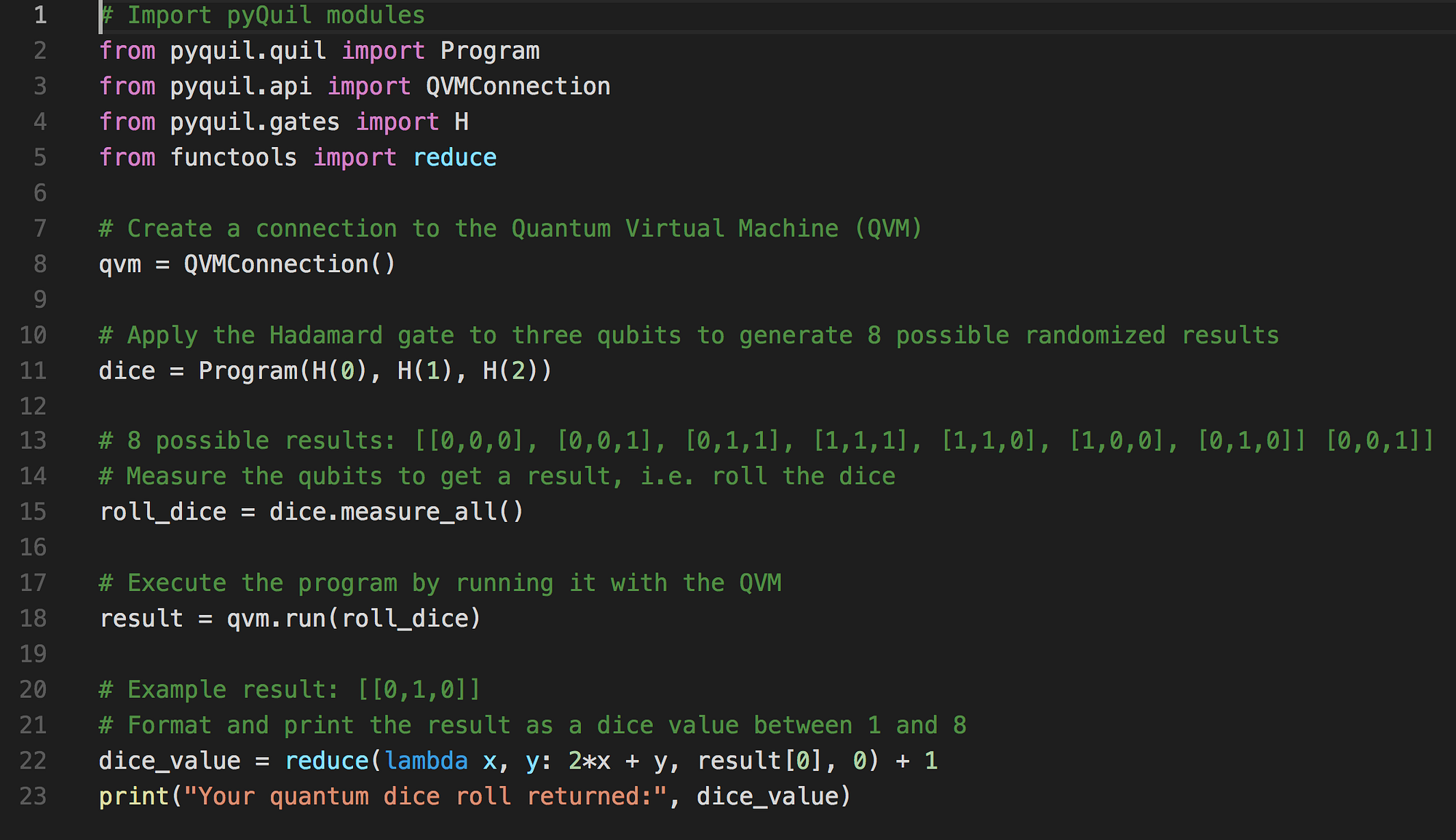
Use Case #1: Random Number Generation (Quantum Dice with PyQuil) #
Create a simple 8-sided dice simulation using Rigetti’s PyQuil:
from pyquil import Program
from pyquil.gates import H, MEASURE
from pyquil.api import get_qc

p = Program()
p += H(0)
ro = p.declare('ro', 'BIT', 1)
p += MEASURE(0, ro[0])

qc = get_qc('1q-qvm')
result = qc.run_and_measure(p, trials=1)
print(result)
This example shows how developers can write quantum code in just 10 lines.
Use Case #2: Create an Entangled Bell State (Qiskit) #
Using Qiskit, generate and measure a simple quantum entanglement:
from qiskit import QuantumCircuit, Aer, execute

qc = QuantumCircuit(2, 2)
qc.h(0)
qc.cx(0, 1)
qc.measure([0,1], [0,1])

backend = Aer.get_backend('qasm_simulator')
result = execute(qc, backend).result()
print(result.get_counts())
The "Bell state" example demonstrates basic quantum circuit building.
Use Case #3: What’s on the Horizon—Optimize with Quantum Annealing #
Quantum annealing systems tackle optimization problems—like scheduling or logistics—faster than classical systems can.
Getting Started: Essential Quantum Frameworks #
| Framework | Language | Best For |
|---|---|---|
| Qiskit | Python | Circuit design & simulator-to-hardware flow |
| Q# (QDK) | Python/.NET | Quantum-classical hybrid workflows, enterprise tooling |
| Cloud APIs (IBM, Rigetti, AWS Braket) | Various | Cloud-based execution without local SDKs |
Internal Links #
FAQ: Quantum Computing for Developers #
Do I need a physics background to start coding quantum? #
No. Frameworks like Qiskit and Q# abstract away most physics. You just write code and focus on logic, not quantum mechanics.
Can I run these examples locally? #
Yes—tools like Qiskit Aer or Q# simulator let you run examples locally. For actual hardware, use cloud access via IBM, Rigetti, or AWS.
What’s a real-world use case I can try? #
Try solving optimization tasks like coloring problem, or simulating entanglement patterns. Use annealing for scheduling tasks or routing.

